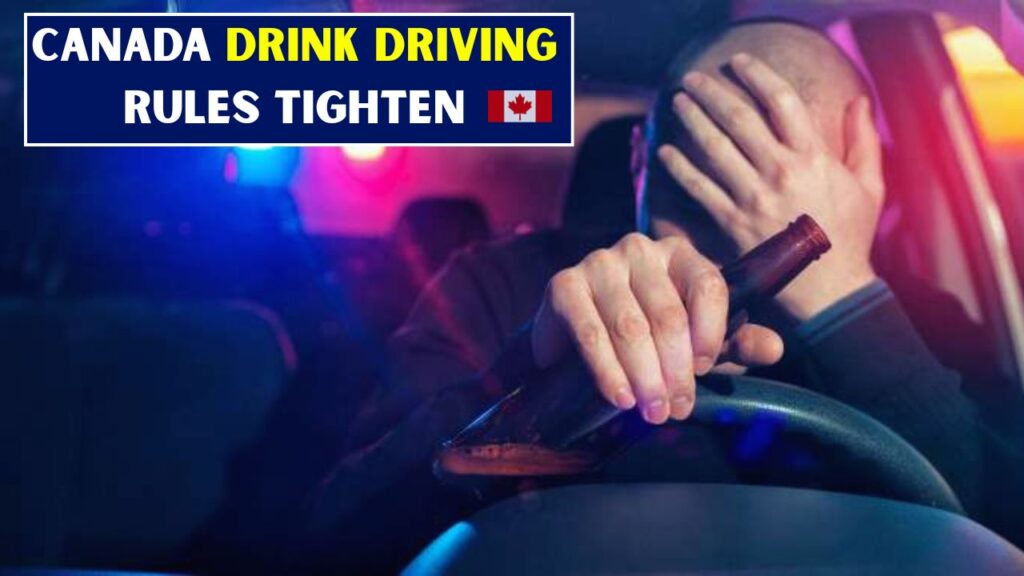
Drink-Driving Penalty in Canada – Canada is tightening its approach to impaired driving as 2026 brings stricter enforcement and a widely discussed $980 drink-driving penalty. These updated rules aim to reduce alcohol-related accidents by combining higher fines, faster roadside actions, and clearer legal consequences. Across the country, authorities are focusing on deterrence, accountability, and public safety rather than leniency. For drivers, this means understanding when the $980 fine applies, how enforcement has changed, and what happens after a violation. Staying informed is essential, as even minor misjudgments can now lead to significant financial and legal consequences.
$980 Drink-Driving Penalty Rules for Canadian Drivers in 2026
The $980 drink-driving penalty in Canada is part of a broader shift toward zero-tolerance style enforcement for alcohol-impaired driving. For Canadian drivers, the fine typically applies to lower-range offences, such as registering a blood alcohol concentration above provincial warning limits but below criminal thresholds. In 2026, enforcement officers have expanded authority to issue immediate roadside penalties, including fines, short-term licence suspensions, and vehicle impoundment. The goal is to create swift consequences rather than lengthy court processes. This approach reflects Canada’s ongoing effort to reduce repeat offences and road fatalities by ensuring that financial penalties are immediate, visible, and hard to ignore.
New Enforcement Measures Affecting Drink-Driving Laws Across Canada
Across Canada, new enforcement measures are changing how drink-driving offences are detected and punished. Random roadside testing, mandatory alcohol screening, and digital reporting systems are now more common, allowing police to act quickly when limits are exceeded. For motorists nationwide, this means fewer warnings and more standardized penalties, including the $980 fine. Provinces are also aligning administrative penalties with federal impaired driving laws to close loopholes that once allowed repeat offenders to avoid serious consequences. These reforms are designed to ensure consistency across regions while reinforcing the message that impaired driving is a serious public safety risk.
| Offence Type | Typical Fine | Licence Action | Additional Consequences |
|---|---|---|---|
| Warn-range alcohol level | $980 | Short-term suspension | Administrative record |
| First impaired offence | Higher court fines | Longer suspension | Mandatory education |
| Repeat offence | Increased penalties | Extended suspension | Vehicle impoundment |
| Refusal to comply | Comparable fines | Immediate suspension | Possible criminal charge |
Who Is Fined Under Updated Drink-Driving Rules for Canadian Motorists
Under the updated framework, Canadian motorists can face the $980 drink-driving fine even without reaching criminal impairment levels. Drivers who exceed provincial warning ranges, refuse roadside screening, or are caught during targeted enforcement campaigns may be fined on the spot. The rules apply broadly, covering private vehicle drivers, commercial operators, and even visiting drivers operating vehicles within Canada. Authorities emphasize that responsibility lies with the driver to assess fitness before driving. By expanding who can be fined and when, lawmakers aim to remove ambiguity and ensure that all drivers understand the financial and legal risks tied to alcohol consumption and driving.
How Canadian Provinces Are Implementing Drink-Driving Penalties in 2026
Canadian provinces play a key role in how the $980 drink-driving penalty is applied in practice. While the fine amount is widely recognized, provinces may differ in suspension lengths, education requirements, and reinstatement fees. Some regions pair the fine with mandatory alcohol education programs, while others emphasize ignition interlock systems for repeat offenders. This provincial flexibility allows local governments to address regional road safety concerns while still supporting national impaired driving goals. For drivers, understanding local provincial rules is just as important as knowing the federal framework, as penalties can escalate quickly based on location.
Frequently Asked Questions (FAQs)
 Goodbye to Pension Confusion: Updated National Pension Rates Roll Out From 10 February 2026
1. When does the $980 drink-driving penalty apply in Canada?
It usually applies to warn-range alcohol offences or administrative violations detected during roadside enforcement.
2. Is the $980 fine a criminal charge?
No, it is generally an administrative penalty, though criminal charges may apply for higher alcohol levels.
3. Do all Canadian provinces use the same penalty rules?
The fine amount is similar, but suspension periods and extra requirements can vary by province.
4. Can a first-time offender receive this fine?
Yes, even first-time drivers can be fined if they exceed provincial warning limits or refuse screening.