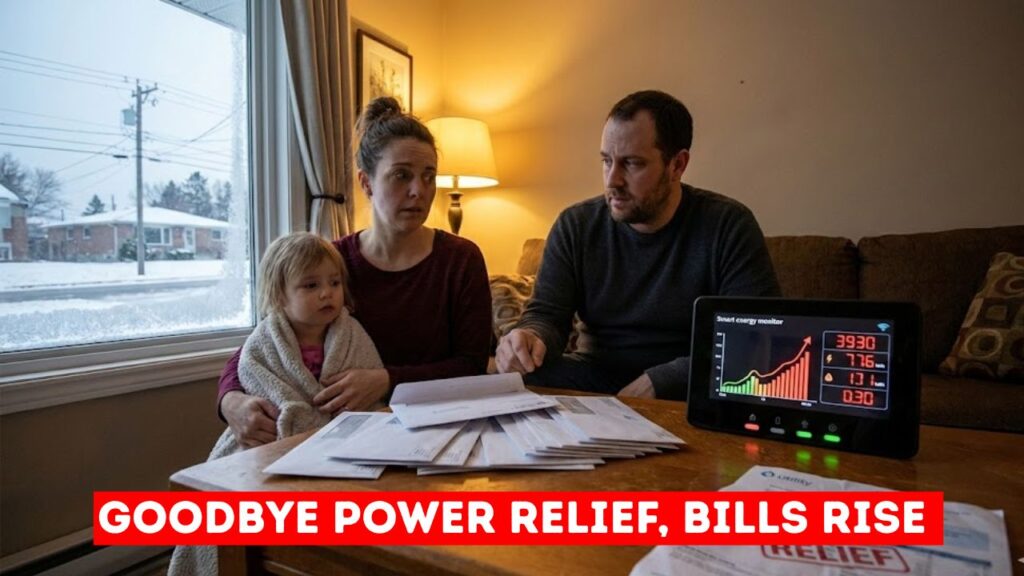
Goodbye to Power Bill Relief – The rising power bills are making it more challenging for Canadian households to manage their expenses. Starting from 5 February 2026, Canadians will face a significant increase in their power bills, ranging from $400 to $900. This sharp rise comes as part of new energy pricing policies that will impact millions of Canadians. This article explores the reasons behind the power bill hikes, who will be affected, and how households can adjust to the new energy pricing. Keep reading to find out how these changes will shape household finances across Canada.
Power Bill Increases Affecting Canadian Families
The upcoming changes in energy pricing will have a profound impact on Canadian families. With the scheduled power bill hikes, families across Canada will see an increase ranging from $400 to $900, depending on their consumption and regional pricing models. The government has cited rising costs in energy production and distribution as the main reasons for these increases. Canadians are advised to expect these changes in February, which will add pressure to household budgets already affected by other economic factors. To manage these changes, experts recommend exploring energy-efficient practices to reduce costs and lower consumption over time.
Understanding the Impact of the Power Bill Hike on Canadians
The power bill increases are part of a broader strategy to address energy shortages and the high cost of energy infrastructure. For Canadian residents, especially those in provinces with higher energy needs, these hikes will be noticeable. Areas with colder climates, like the northern regions, will face the most significant increases, as heating demands are substantial. Canadian citizens are urged to be proactive about conserving energy by adopting energy-saving devices and practices, such as using programmable thermostats and insulating homes to reduce heating costs. Additionally, the Canadian government is offering some subsidies to help low-income households manage these hikes.

| Province | Power Bill Increase | Monthly Average Pre-Hike | Estimated New Average |
|---|---|---|---|
| Ontario | $400 | $180 | $580 |
| Quebec | $450 | $200 | $650 |
| Alberta | $500 | $220 | $720 |
| British Columbia | $600 | $250 | $850 |
How the Canadian Government Plans to Address Power Bill Increases
As the new power bill changes loom, the Canadian government is putting measures in place to assist vulnerable households. For instance, subsidies and relief programs are expected to be rolled out for low-income Canadian seniors, families with children, and individuals facing financial hardship. While these measures are intended to ease the burden on affected households, they may not completely offset the increases. Canadian households will need to focus on practical solutions to minimize their consumption, such as adopting alternative energy sources, like solar panels or wind energy, where applicable.
Practical Steps for Canadian Households to Manage Higher Energy Costs
To better manage the upcoming power bill increases, Canadian households should prioritize energy conservation measures. Simple steps like switching to energy-efficient appliances, improving insulation, and using energy-saving lighting can help reduce electricity consumption. Additionally, many utility companies are providing energy audits to identify areas where households can cut back on power usage. Implementing these changes will not only help offset the impact of the price increases but also contribute to long-term savings on energy costs for Canadian residents.
Frequently Asked Questions (FAQs)
 Goodbye to Pension Confusion: Updated National Pension Rates Roll Out From 10 February 2026
1. Why are power bills increasing in Canada?
The increase is due to rising costs in energy production and infrastructure maintenance, as well as the growing demand for power across the country.
2. How much will the average Canadian household pay after the hike?
The average Canadian household will pay between $400 and $900 more per year, depending on their region and energy usage.
3. Are there any government programs to help with the increase?
Yes, the government is offering subsidies and relief programs to help low-income families and seniors cope with the hike.
4. What steps can households take to reduce their power bills?
Households can adopt energy-saving practices such as using energy-efficient appliances, insulating their homes, and switching to LED lighting.